
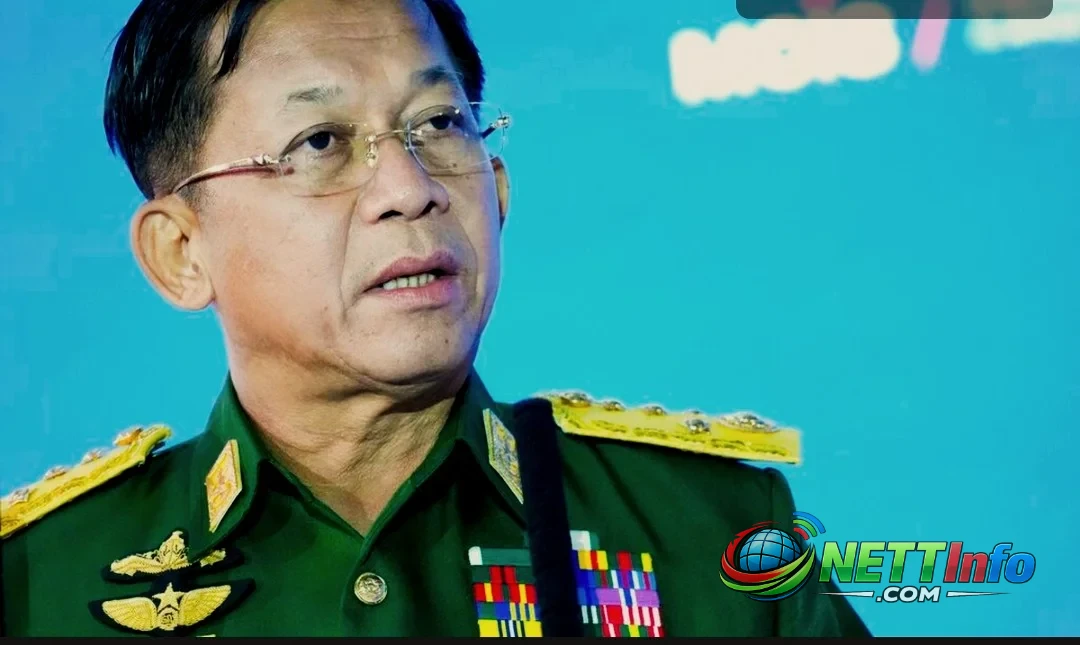
Indonesia Opens the Door to Universal Justice: First Rohingya Genocide Lawsuit Appears in New Criminal Code "Myanmar President, Min Aung Hlaing. The Charge? Systematic Genocide Against the Rohingya"

Smallest Font
Largest Font
Jakarta, NETTInfo. Com
A milestone in international law has been achieved in Indonesia.
On Monday (April 6, 2026), several civil society organizations and national figures rocked the Attorney General's Office with a sensational criminal complaint against Myanmar's new President, Min Aung Hlaing. The charge? Systematic genocide against the Rohingya, the world's largest stateless group who have suffered forced displacement, mass killings, and brutal violence since 2017.
This lawsuit is no ordinary report. Initiated by Rohingya survivor Yasmin Ullah and Director of the Myanmar Accountability Project, Chris Gunness, and supported by a number of influential Indonesian figures, including Marzuki Darusman (former Attorney General), Busyro Muqoddas (former Chairman of the Corruption Eradication Commission), Bivitri Susanti (constitutional law expert), Heru Susetyo (Professor of the University of Indonesia's Law Faculty), Wanda Hamidah (human rights activist), and Dimas Bagus Arya (Coordinator of the KontraS Working Group). They are ready to present grim evidence: photographs of strewn bodies, victim testimonies, and data on the displacement of millions of people.
"This is the first time that an official case has been accepted under Indonesia's new Criminal Code. I welcome this historic development as a milestone for all Rohingya people in their long struggle for justice and accountability," said Yasmin Ullah hopefully, as quoted by Reuters.
Universal Jurisdiction: Indonesia's New Weapon Against Crimes Against Humanity
The legal basis is clear: Law Number 1 of 2023 concerning the Criminal Code, specifically Articles 5 to 9, which adopts the principle of universal jurisdiction. "Perpetrators of human rights crimes anywhere, outside Indonesian territory, can be prosecuted here," asserted Marzuki Darusman. This principle aligns with international legal obligations, allowing Indonesia to prosecute genocide regardless of the victim's territory or nationality.
The Head of the Attorney General's Office's Legal Information Center, Anang Supriatna, responded positively. "According to our standards, we receive every complaint. We will review it, study it, and make recommendations to the relevant work units," he said.
The Attorney General's Office also expressed deep sympathy for the suffering of the Rohingya, while emphasizing a thorough study of the application of the new Criminal Code in transnational cases.
This step marks a new era for Indonesia as an enforcer of global justice.
For the Rohingya scattered in refugee camps, this is real hope. Will Min Aung Hlaing, the newly elected junta leader, face the call for justice from Jakarta?
